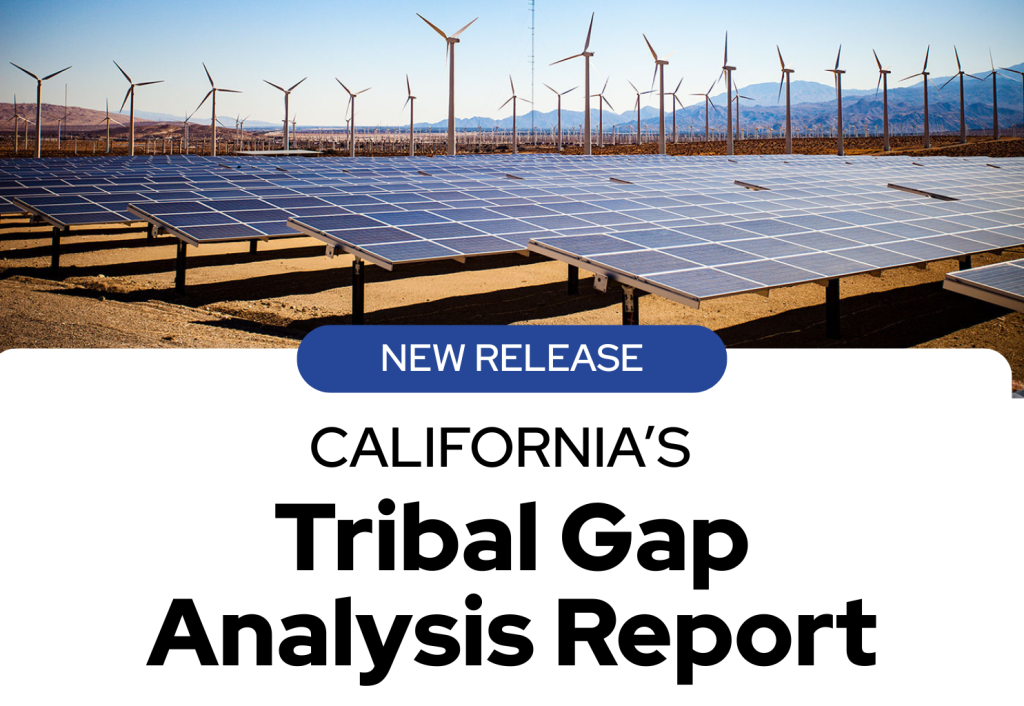
A newly published report helps to better define how California agencies can support Native American Tribes to advance clean energy and climate change initiatives.
The California Tribal Gap Analysis (CTGA) report, prepared by Prosper Sustainably LLC on behalf of the California Strategic Growth Council (SGC) and the California Energy Commission (CEC), offers extensive recommendations to strengthen the state’s relationships with Tribes and enhance Tribes’ preparedness to achieve climate goals.
The CTGA study sought to identify Tribal priorities, needs, and barriers in the areas of clean energy and climate change adaptation and resilience. The final report provides recommendations for the development and enhancement of State of California programs, funding, technical assistance (TA), and other resources to address Tribal needs and priorities. The report’s recommendations also aim to foster stronger partnerships between Tribes and state agencies to support current and future programs and grants.
The CTGA report contains key findings related to Tribal clean energy and climate change adaptation and resilience goals, the areas of highest need for assistance on relevant subtopics, and specific activities that Tribes identified as priorities. The Recommendations and Conclusions section includes wide-ranging guidance to help state agencies provide more effective support to Tribes through improvements in state programs, TA, and Tribal outreach and engagement. An Executive Summary summarizes key findings, gaps, and recommendations and conclusions.
The SGC, in partnership with the CEC, contracted with a team led by Prosper Sustainably LLC in 2020 to conduct the CTGA project through primary research to gather perspectives from Tribes, Tribal-serving organizations, and state agencies. All California Tribes were invited to participate. Representatives from 76 Tribes — 57 federally recognized and 19 non-federally recognized — responded to the CTGA questionnaire. The CTGA process included gathering and analyzing information from a variety of secondary sources, including reports from a series of Tribal energy and climate meetings hosted by the CEC and more than 150 relevant assistance programs offered by state, federal, non-governmental and private sources, ranging from grants and incentives to TA.
Report review processes included a public feedback process, which concluded late last year, to obtain input on the draft report. Feedback opportunities included a webinar, three virtual workshops, two in-person presentations, and feedback to report authors. More than 70 people participated in one or more of those opportunities to provide feedback, including more than 20 Tribal members, leaders, and staff.
Links: