Regional Climate Collaboratives Annual Report Year 2: Gateway Cities Regional Climate Collaborative (GCRCC)
Overview
Award Amount: $1,7500,000
Region: Los Angeles County
Communities Served: Bell, Bell Gardens, Cudahy, Huntington Park, Lynwood, Maywood, South Gate, Vernon, Florece/Firestone, and Walnut Park
Partners:
“In Year 2, the Gateway Cities Regional Climate Collaborative (GCRCC) is amplifying outreach and partnerships in the Southeast Los Angeles region and deepening research with the community. We are expanding our on-the-ground work with a variety of stakeholders, and each of the collaborative members has taken on a unique leadership role in carrying out the implementation.”
About the Collaborative
The Gateway Cities Regional Climate Collaborative, located in Southeast Los Angeles County (SELA), brings together five community partners to address the climate issues most concerning to residents in the region by prioritizing community engagement, data collection, and resource sharing. According to GCRCC’s research and outreach, residents cite extreme heat, high levels of pollutants, and lack of green spaces as the primary climate issues facing the SELA region. GCRCC is developing a roadmap that will highlight GCRCC outcomes, capacity-building needs of local jurisdictions in their Communities of Focus, and priority projects that will address those needs.
Activities Conducted in Year 2
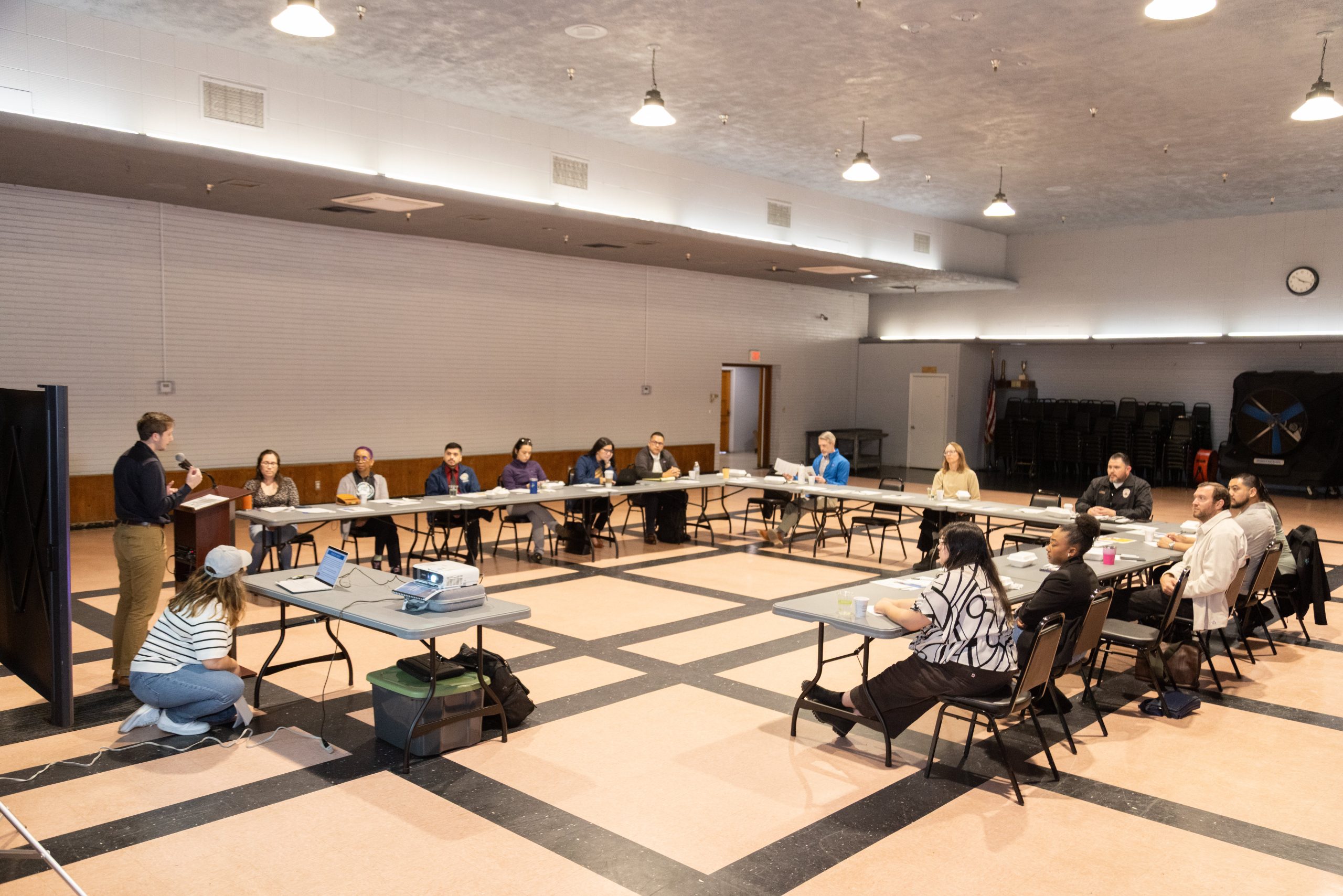
In its second year, GCRCC continued to gain a better understanding of and address the climate issues that impact the SELA region. In July 2024, GCRCC hosted a Climate Change 101 workshop at Charles Drew University for student researchers that described GCRCC’s work and how climate change specifically impacts SELA residents. Students who attended this workshop distributed 200 surveys to community residents in September 2024. Survey results revealed that the majority of respondents believe that it is important to address the health impacts of climate change and improve their quality of life through increased access to shade, open spaces, and cooling infrastructure. The survey results will inform the development of the GCRCC Roadmap. The roadmap will summarize highlights of GCRCC grant outcomes, synthesize data that has been gathered, develop goals for addressing climate issues in the subregion and capacity building of stakeholders, and identify opportunities for multi-benefit solutions.
GCRCC’s focus on community engagement allowed them to adapt to the most pressing needs of their community. In the aftermath of the Los Angeles County fires, GCRCC partnered with the Climate Initiative to host emergency preparedness workshops for local government staff and community residents and collaborative member TreePeople hosted a Climate Gardening 101 Symposium to invite academics to share resources. GCRCC also developed a community survey focused on clean energy workforce development, specifically understanding the barriers SELA residents face trying to enter the clean energy workforce and how to address those barriers. Results of the survey are forthcoming and will support GCRCC’s goal of developing the local SELA workforce and protecting against displacement.
During this year, GCRCC secured several grants that address some of the primary climate issues in the SELA region. In September 2024, TreePeople developed a grant for the City of Lynwood that was awarded by CAL FIRE under its Urban and Community Forestry Grant Program. The grant will support the development of the city’s first urban forest management plan and will result in 1,000 trees planted in the city. This grant will address a key issue identified by residents in this region. In October 2024, Gateway Cities COG was part of a Southern California coalition that was awarded an Equitable Building Decarbonization Grant from the California Energy Commission. This grant funds the installation of energy efficient appliances and upgrades for low-income residents in the SELA region. Moving forward, GCRCC will continue to prioritize state funding opportunities focused on extreme heat, sustainable energy, urban greening, and more in the final year of the grant term.
Outcomes
- Held over 35 external meetings with more than 1,400 community members and local representatives including the LA Funders Collaborative, Climate Resolve, Southern California Regional Energy Network, U.S Green Building Council Los Angeles, and more.
- Secured more than $3.9 million in grants from CAL FIRE, California Energy Commission, Southern California Regional Energy Network, the National Oceanic and Atmospheric Administration, and the Water Foundation.
- Participated in the development of Los Angeles County’s Extreme Heat Action Plan.
- Completed a Climate Needs Assessment in partnership with Charles Drew University that will be one component in informing the development of a GCRCC roadmap.
What’s Next
In the last year of its grant term, GCRCC will be bringing on a new public health-focused partner, AltaMed. The addition of this partner will allow the collaborative to make explicit connections between climate change and public health through the use of community health workers and community scientists. They will continue to develop a GCRCC Roadmap through data analysis with Loyola Marymount University and additional community engagement. GCRCC will also continue to assess and strengthen its relationship as a collaborative through regular partner meetings, partner retreats, and internal evaluation. This will ensure that GCRCC will continue its work after the end of the grant term.