Regional Climate Collaboratives Annual Report Year 2: Marin Climate Justice Collaborative
Overview:
Region: Marin County
Award Amount: $996,390.00
Communities Served: Canal District of San Rafael, Marin City
Websites:
- Canal Alliance/NCNF: https://www.canalalliance.org/advocacy/neighborhood/
- Marin City Climate Resilience: https://www.marincityclimateresilience.org/home
- MCCR Video link: Forever Marin City Futures Forum
Partners
“The Marin Climate Justice Collaborative has allowed us to invest in people, partnerships, and place. Through this place-based work, we have built the leadership capacity and policy infrastructure for Latino Immigrant families to actively design and lead the transformation of their neighborhood into a thriving, just community.”
About the Collaborative
The Marin Climate Justice Collaborative aims to increase capacity and address climate impacts in Marin City and San Rafael’s Canal District. These two communities in Marin County have been historically underinvested while bearing the worst climate impacts in the county. The collaborative is managed by Canal Alliance, which leads the collaborative’s work in the Canal District, while Marin City Climate Resilience and Health Justice (MCCRHJ) leads the work in Marin City. Their goal is not only to build community capacity, but to ensure community participation leads public planning and local decision-making to reverse a history of poor planning processes, segregation, and environmental injustice.
Activities Conducted in Year 2
In Year 2, the collaborative has made significant progress in supporting participatory planning, placemaking, and community decision-making. The collaborative is currently developing Neighborhood Vision Plans for the Canal District and Marin City through a variety of engagement and leadership development strategies. In the Canal neighborhood, the Nuestro Canal, Nuestro Futuro (NCNF) initiative has a 20-resident Consejo (Resident Advisory Council) who serve as the decision-making body informing NCNF priorities. Members of the Consejo are developing skills and receiving education about the planning process to ultimately design and shape their neighborhood vision plan. In Marin City, MCCRHJ is working closely with youth through its Young Environmentalists Program and providing training and resources for them to effectively engage in community planning efforts that create positive change in Marin City.
Additionally, the partners focused on San Rafael’s Canal District have leveraged mapping tools like Geographic Information Systems (GIS) alongside residents to create an asset map of the canal that can be continually updated and inform the development of future priorities in the Neighborhood Vision Plan. Furthermore, the collaborative has leveraged the RCC Program’s technical assistance team to develop evaluation tools for various community engagement events and project activities. The evaluation tools have proved critical to improving the quality and success of the events and programs.
The collaborative has also made headway building trusted relationships with external partners. For example, Canal Alliance has partnered with Marin Promise Partnership (MPP), which provides subject matter expertise on education. Staff from MPP met bi-weekly with Canal Alliance staff to co-develop materials that were presented to the Consejo to prepare to facilitate resident education working groups that develop and inform community workshops. The partnership with MPP is ongoing and will continue to develop and inform both organization’s planning initiatives.
The Marin City lead partner, MCCRHJ, has contracted with a consultant to support its community visioning for the Neighborhood Plan. It has also fielded surveys to better understand community needs and likely opportunities for engagement. MCCRHJ also deepened its relationship with the Marin County Foundation to leverage the planning process and support the building of organizational capacity. The Marin City partners continue to strengthen collaboration with Marin County Public Health for engagement in a Marin City Public Health Assessment.
After submitting several grant applications for federal funding throughout 2024 and early 2025, those that were awarded were ultimately reversed by the federal administration, including a $500,000 U.S. Environmental Protection Agency grant and National Science Federal grant.
Outcomes
- Marin City Climate Resilience and Health Justice co-hosted the Forever Marin City Futures Forum, a community-led convening focused on public health, education, employment, housing, and self-governance. MCCRHJ shared its documentary that highlights important issues and initiatives in Marin City.
- The collaborative applied for over $800,000 in federal and private funding opportunities.
- Canal Alliance joined the Bay Area Regional Climate Adaptation Network (BayCAN) to further increase collaboration with Bay Area partners in advancing equitable adaptation to climate change.
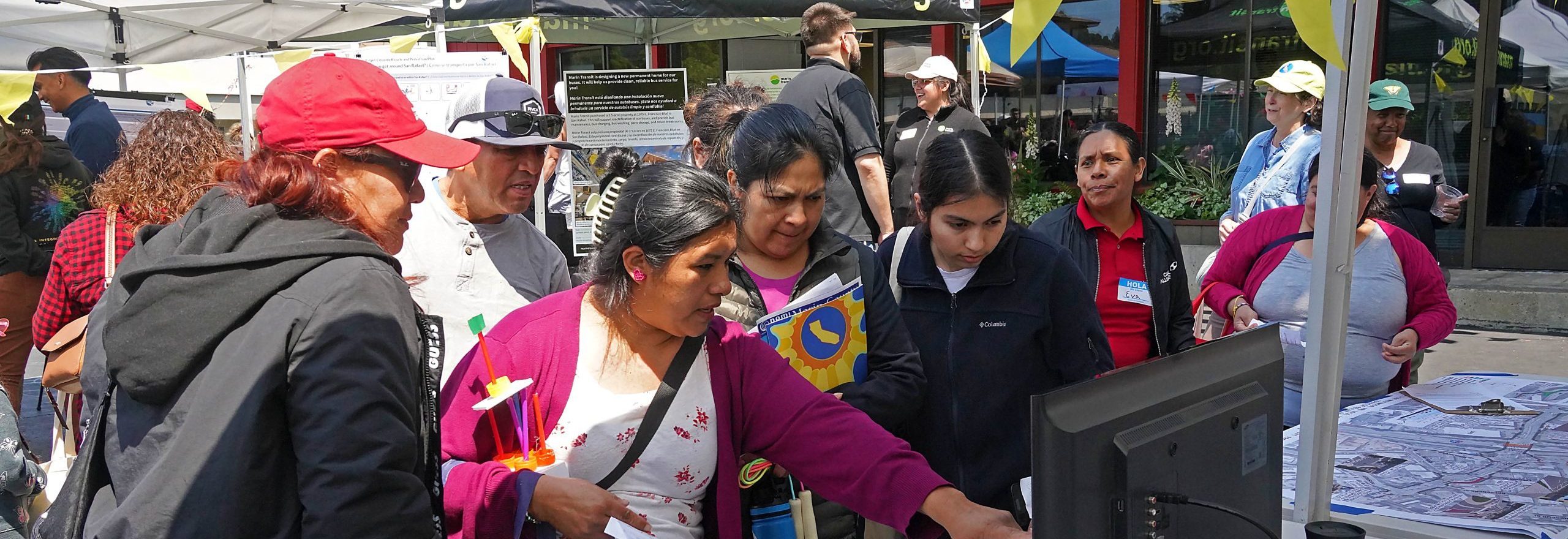
- Canal Alliance hosted a Community Resource Fair with over 400 attendees to promote community participation in the Nuestro Canal Nuestro Futuro campaign.
- Canal Alliance was selected as a sub-consultant for the San Rafael Southeast Specific Plan to collaborate and serve as a partner on engagement, planning, and design to align the development of the plan and the Neighborhood Vision Plan.
- Two members of the Consejo were selected to participate in a panel at the 2025 California American Planning Association Conference.
What’s Next
The collaborative will be actively working on the Neighborhood Plans for Marin City and the Canal District through the end of the grant period. These plans will contain key community-driven projects and policy priorities to continue pursuing with both their existing collaborative partners and emerging partnerships and funders.
Despite being impacted by the reversal of federal grant programs, the Marin Climate Justice Collaborative is continuing to build partnerships with private funders such as the Marin Community Foundation and plans to pursue a Transformative Climate Communities grant to implement the projects identified in neighborhood plans.