Regional Climate Collaboratives Annual report Year 2: San Joaquin Regional Climate Collaborative
Overview
Award Amount: $1,750,000.00
Region: San Joaquin County
Communities served: Northeast Tracy, Northeast Lodi, Northwest Stockton
Website: San Joaquin Regional Climate Collaborative | San Joaquin Council of Governments, CA
Partners
“Being part of the San Joaquin Regional Climate Collaborative has shown us the power of working together across sectors. In just two years, we’ve built stronger partnerships and seen real momentum toward climate resilience. We’re excited to keep pushing forward with community-led solutions.”
About the Collaborative
The San Joaquin Regional Climate Collaborative (SJRCC), led by the San Joaquin Council of Governments, was formed in 2022 to focus on increasing climate education and engagement to pursue climate resilience projects in their communities of focus: Lodi, Stockton, and Tracy. The collaborative aims to support equitable planning, programs, and policies for the three communities to help drive community-driven climate projects in the region. Throughout the RCC grant term, SJRCC has continued to grow in its capacity, as a collaborative and among individual partners, in addition to establishing trust with communities through the formation of the Community Advisory Board (CAB). The collaborative hosted several educational workshops on resiliency topics, including flooding, wildfire risk, sustainable housing, and transportation, for the purpose of informing and working with communities on future climate resiliency projects.
Activities Conducted in Year 2
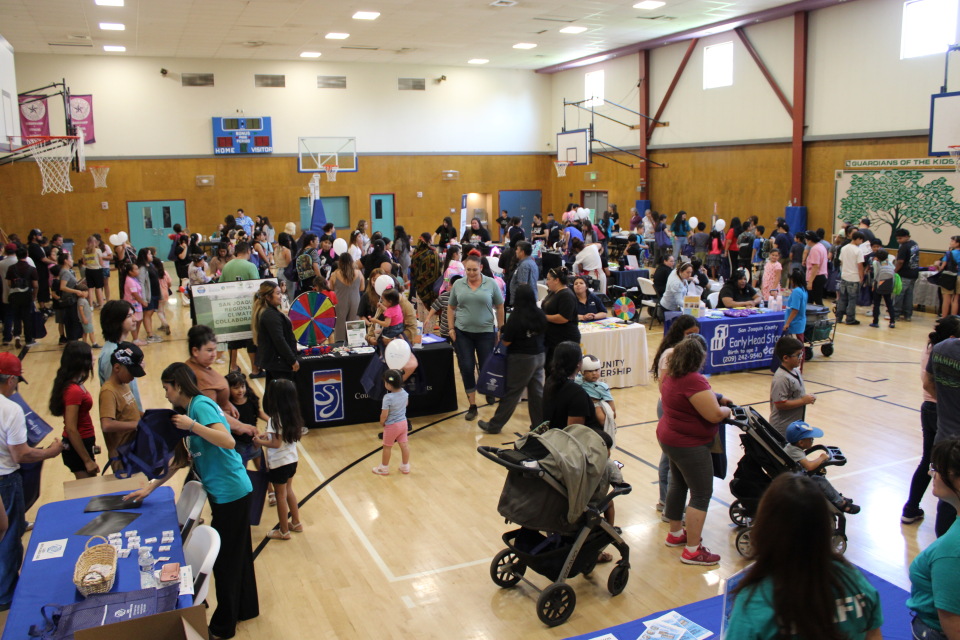
In the last year, the collaborative has ramped up its in-person and virtual engagement by facilitating educational workshops in communities of focus in partnership with CAB members and their networks. The SJRCC facilitated a Needs Assessment Survey as part of this engagement to determine and align the different climate priorities in each community of focus. The SJRCC was also able to collaborate and build relationships with local government staff from these communities, who attend the bi-monthly CAB meetings to inform members of relevant city projects and identify potential future projects.
SJRCC also launched the development of Sustainable Neighborhood Plans for each community through a series of workshops. These workshops focused on gathering input from community members on their climate-related priorities to inform the development of project ideas for the plans. The plans will ultimately serve as a framework in promoting sustainable development, improving quality of life, and addressing local needs to ensure that these communities are more climate-resilient.
The collaborative was able to leverage the Mobility, Access, and Transportation Insecurity grant it secured through the RCC Program in Year 1 by engaging residents and partners on specific transportation needs and the possible development of Mobility Hubs in their area. The top three Mobility Hub demonstration projects from this grant are sites in the SJRCC’s three communities of focus.
The creation of the CAB deepened the collaborative’s relationships with its communities of focus, building trust and stronger ties that will be critical to the success of the collaborative’s efforts beyond the grant term. The SJRCC is also strengthening relationships with local governments by working with city staff to identify and participate on upcoming planning projects such as General Plan updates and development of Climate Action Plans and Environmental Justice Elements.
SJRCC also continued building deeper relationships among its collaborative partners in the last year, refined its collaborative governance structure, and established communication processes needed to ensure a successful and trusting long-term partnership.
Outcomes
- Hosted six educational workshops in Tracy, Lodi, and Stockton focusing on climate literacy; affordable housing and sustainable transportation; climate disaster readiness; impacts of wildfire, extreme heat, and flooding; energy efficiency; and sustainable living practices.
- Launched the development of Sustainable Neighborhood Plans for each community of focus.
- Facilitated a Needs Assessment Survey, which collected 157 survey responses, highlighting pressing needs from communities in Stockton, Tracy, and Lodi. The survey focused on addressing extreme heat, air pollution, and educational and youth opportunities.
- Participated in over 80 engagement events with over 900 attendees across these events, ranging from community Earth Day events to City Commission meetings.
What’s Next
The SJRCC is looking forward to finalizing the Sustainable Neighborhood Plans for each community, marking the close of the grant term. These plans will serve as a framework for community development, allowing community members to envision tangible projects and solutions to address their priorities. The SJRCC will utilize these plans to inform cities of community-driven project ideas and increase accountability between community residents and local government. The collaborative envisions the Sustainable Neighborhood Plans and other RCC deliverables as additional resources for RCC partners, stakeholders, and others to pursue grant funding.
Finally, the collaborative will be pursuing funding opportunities for the projects identified in the Sustainable Neighborhood Plans. With the decrease in federal funding available and the loss of Federal Clean Fuels Grant awarded in early 2025, the RCC is thinking creatively about how to pursue funding after the grant term ends by considering state and private funding opportunities. The SJRCC is committed to continuing its climate resiliency work and hopes to secure funding to sustain its partnership.