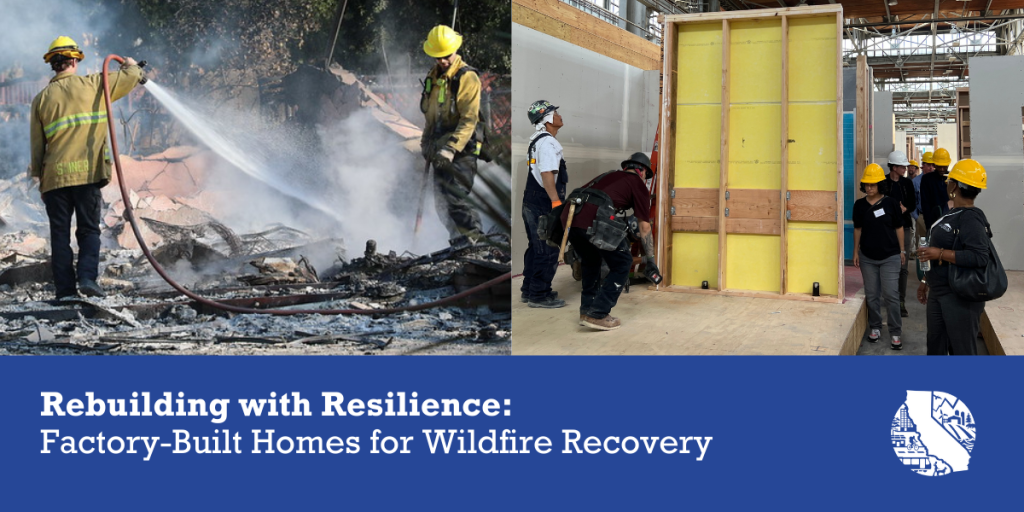
Expanding access to housing solutions that help wildfire victims return home sooner — and rebuild with resilience at the core
LOS ANGELES — Gov. Gavin Newsom today announced the availability of more funding to help survivors access factory-built housing solutions that help speed rebuilding. As a result of the Governor’s executive orders to streamline approvals, local agencies have approved 3,000 rebuilding permits at a rate roughly three times the speed as prior to the fires – with Los Angeles firestorms survivors using modular housing or other prefabricated options already living in new homes.
Survivors can find factory-built options for faster rebuilding through the state’s rebuilding tool launched in partnership with LA Rises. These options were designed specifically for communities rebuilding and maintaining the unique character and style of neighborhoods recovering.
Rebuilding after wildfires shouldn’t take years. As L.A. fire survivors continue to recover, we’re cutting red tape by accelerating housing solutions that get families back in their homes faster while building stronger and more resilient housing for the future.
Funding to Grow Factory-Build Housing Solutions
Existing state funding can help survivors and others access factory-built homes. These homes are built off-site in controlled, high-efficiency facilities and delivered ready for installation. Today, the Governor is announcing $10 million in funding available in the next round of the California Strategic Growth Council’s (SGC) competitive Factory-Built Housing Regional Pilot Program, creating more opportunities for housing providers and governments. The Round 3 Notice of Funding Availability is now live, and the application period has officially opened as of Friday, Feb. 13.
Companies and nonprofits developing factory-built housing solutions in Los Angeles and statewide are encouraged to apply, as well as local governments, tribes, nonprofits, and regional partners, to bring factory-built housing solutions to their communities.
Factory-built housing helps communities move from loss to stability faster. By shortening construction timelines and reducing costs, these structures help families return to homes sooner and give wildfire-impacted communities a real chance to recover and rebuild in the near term — when support matters most.
Read the Governor’s press release.
A New Approach to Recovery
For survivors, traditional rebuilding can take years. Contractor shortages, permitting backlogs, damaged infrastructure, and the need to meet updated fire-safe building codes are major barriers. Many are also underinsured, leaving them unable to cover rising construction costs even after insurance and federal assistance. At the same time, burned lots often require extensive cleanup, soil testing, and utility repairs before rebuilding can even begin. These challenges — layered with the emotional strain of displacement and the risk of losing community ties — make recovery especially hard for low-income families, seniors, and people with limited resources.
Here’s where factory-built housing enters the conversation. Unlike traditional construction, factory-built homes are built off-site in controlled, high-efficiency facilities and delivered ready for installation. This approach doesn’t just save time — it transforms what recovery can look like for families displaced by disasters.
Factory-built housing can:
- Get people back into homes faster.
- Lower costs through streamlined, low-waste production.
- Improve resilience with durable, fire-resistant materials and climate-adaptive designs.
- Reduce emissions by relying on high-efficiency, environmentally responsible manufacturing.
For communities like those in Los Angeles County, these benefits are not theoretical. They’re urgent.
This type of housing will be part of the solution to getting wildfire victims back to their homes and re-introducing rental housing into Altadena. We lost so much naturally occurring affordable housing in Altadena, and that loss hit our seniors, low-income families, and veterans especially hard. These investments reflect what our community needs to move forward.
Already Making an Impact
Gov. Gavin Newsom issued an executive order to fast-track temporary units, and the scale of need has driven rapid adoption of modular and prefabricated solutions. These models are helping the region rebuild faster, while also laying a foundation for long-term resilient housing strategies.
Some firestorm survivors in Los Angeles County are already using factory-built housing in recovery, including Steve Gibson in Altadena.
READ: Blog about Steve Gibson
With construction on his new factory-built home nearly complete and a move-in date ahead, he will be the first of his neighbors to return home to a new house.
“We’ve talked to our immediate neighbors,” Gibson said. “They all want to rebuild. That’s a positive sign.”
Construction itself took just six weeks from foundation to walls, and less than three months to near completion—even after crews had to clear debris, remove tree stumps, and re-grade land left uneven after the fire.
His new home is also built with resilience in mind—largely steel, with fire-resistant materials designed to reduce how embers and heat can enter.
“I want to be an example for others,” Gibson said. “We’re almost ready to move back in, so I know it can be done.”
Gibson isn’t the only survivor turning to factory-built housing: The Rodriguez family in Altadena and Sue Labella in the Palisades are among those joining him.
Labella was issued a certificate of occupancy on the one-year anniversary of the fire, and the move-in process is officially underway. Labella’s new residence includes a 2,300-square-foot main home organized around a courtyard, along with a detached 800-square-foot, two-bedroom guest home (ADU). Both structures are built from non-combustible, all-steel panels fabricated in a Gardena factory and assembled on site without a crane.
Another California community impacted by wildfire also used factory-built housing to accelerate recovery. After the 2018 Camp Fire devastated Paradise, modular buildings became a critical lifeline. Thousands of residents were displaced, and more than 1,500 cleanup crew members needed places to stay during one of the largest debris-removal efforts in state history. Nearly 300 modular units were installed to create temporary living quarters for workers, allowing cleanup and rebuilding efforts to move forward much faster than traditional construction would allow.
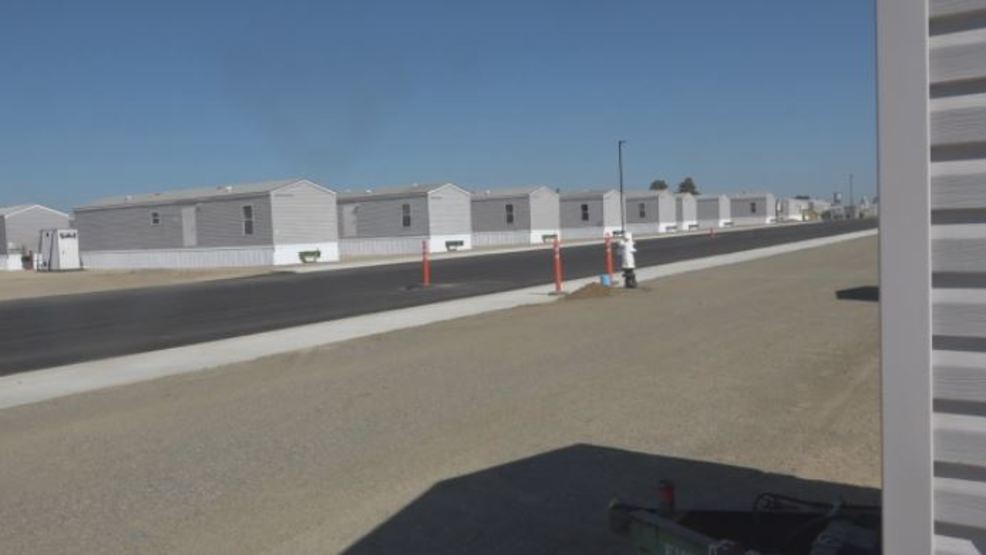
A similar approach helped the community of Lahaina, Hawaiʻi, after the 2023 wildfire destroyed much of the town. Within weeks, more than 100 modular homes were constructed, shipped to Maui, and installed — giving displaced families access to stable, permanent housing far sooner than conventional rebuilding methods could provide.
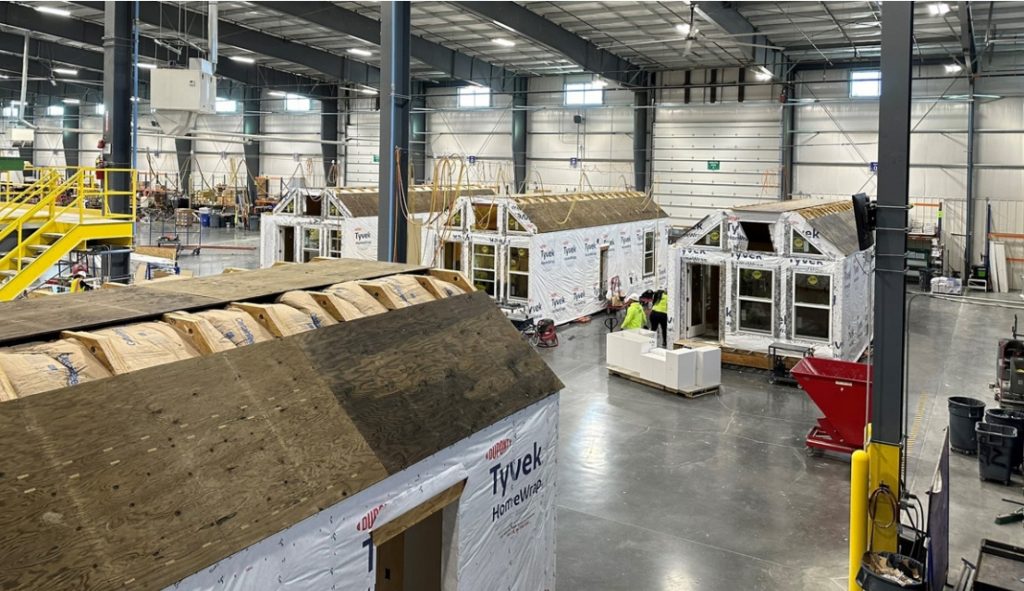
Factory-built homes can be designed with durable, fire-resistant materials and climate-adaptive features. For communities facing extreme heat, smoke events, and worsening climate risks, these resilience features can protect households and entire neighborhoods. They offer families peace of mind while reducing long-term vulnerabilities. In terms of recovery, one of the biggest challenges is long-term displacement. By allowing families to rebuild more quickly on their original lots or nearby, factory-built housing helps preserve the social connections that make communities strong — including access to jobs, schools, health care, and support networks. Stability is essential to recovery, and factory-built housing helps protect it.
California Factory-Built Housing Pilot Program
At its December 2025 meeting, the California Strategic Growth Council (SGC) voted to approve grant funding guidelines for the third round of its Factory-Built Housing (FBH) Regional Pilot Program — a major step toward expanding this critical housing solution. And now the program has released its Notice of Funding Availability.
Factory-built housing can help wildfire survivors get back into safe, stable homes faster, while also supporting California’s long-term housing and resilience goals. This program will help communities rebuild in ways that are quicker, more affordable, and better prepared for future climate impacts.
“Factory-built housing can help wildfire survivors get back into safe, stable homes faster, while also supporting California’s long-term housing and resilience goals,” said Tomiquia Moss, Secretary of the Business, Consumer Services and Housing Agency. “This program will help communities rebuild in ways that are quicker, more affordable, and better prepared for future climate impacts.”
The FBH Pilot Program was created in 2023 to help California deal with major, overlapping challenges — like the need for affordable housing, preparing for climate impacts, cutting pollution, and rebuilding after disasters. This is the third round of the program, which works to bring local partners together to speed up the use of factory-built homes so communities can build safer housing faster and more efficiently. A Notice of Funding Availability (NOFA) was just released, opening up new opportunities not only for wildfire victims in Los Angeles County, but to all local governments, Tribes, nonprofits, and regional partners to bring factory-built housing solutions to their communities.
Round 3 funding includes:
- $10 million available for competitive grants
- Up to $500,000 for Catalyst Grants (two-year term)
- Up to $3 million for Planning Grants (three-year term)
- No match requirement
- Up to 25% advance payment for eligible Catalyst Grantees
- Approximately $1 million set aside for no-cost technical assistance and capacity building
Technical assistance to help with filling out the grant application will be available to ensure applicants prepare strong proposals and, once awarded, implement projects smoothly.
Building a More Resilient Future
As climate change accelerates wildfire risk and housing pressures across the state, factory-built housing is offering communities a faster, more sustainable path to recovery and long-term stability. Units are produced in controlled environments that minimize waste, reduce construction-related emissions, and allow for high energy-efficiency standards.
Factory-built housing is more than a temporary solution. It is a forward-looking tool for rebuilding communities faster and more sustainably. With Round 3 guidelines approved, California is helping communities advance housing solutions that get families home sooner and support long-term recovery. The wildfires of recent years show that California must rebuild with intention — prioritizing safety, speed, equity, and climate resilience. With continued investment and strong regional partnerships, factory-built housing can help California recover more quickly after disasters and build a more resilient future for everyone.
The Factory-Built Housing Regional Pilot Program is part of California Climate Investments, a statewide program that puts billions of Cap-and-Invest dollars to work reducing GHG emissions, strengthening the economy, and improving public health and the environment – particularly in disadvantaged communities.
About the California Strategic Growth Council
The SGC is a Cabinet level Council housed within the Governor’s Office of Land Use and Climate Innovation that works to coordinate and work collaboratively with public agencies, communities, and philanthropy to achieve sustainability, fair access, economic prosperity, and quality of life for all Californians. The Council is composed of the leaders of seven state agencies and three public members who work together to build healthy, thriving, resilient communities for all Californians.
About the FBH Program
The Factory-Built Housing Pre-Development Pilot Program is part of California Climate Investments, a statewide program that puts billions of Cap-and-Invest, formerly known as Cap-and-Trade, dollars to work reducing greenhouse gas emissions, strengthening the economy, and improving public health and the environment — particularly in disadvantaged communities.
The Cap-and-Invest program also creates a financial incentive for industries to invest in clean technologies and develop innovative ways to reduce pollution. California Climate Investments projects include affordable housing, renewable energy, public transportation, zero-emission vehicles, environmental restoration, more sustainable agriculture, recycling, and much more.