
Media Contact: LCI.press@lci.ca.gov
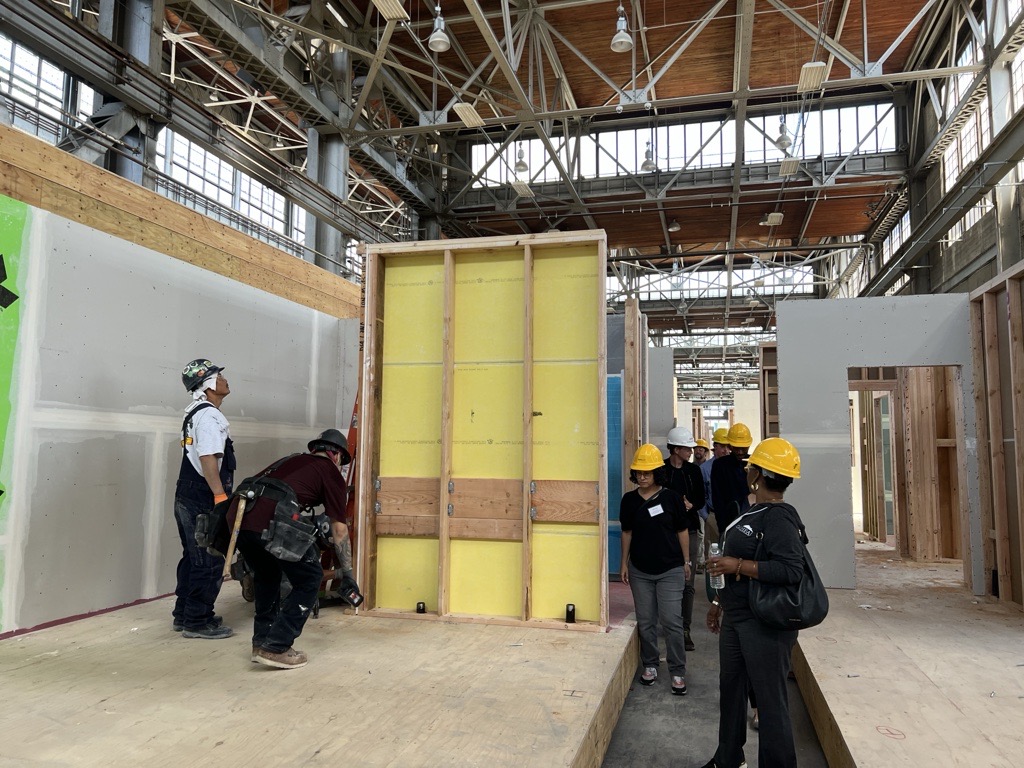
SACRAMENTO (11/2/26) — From advancing preapproved wildfire‑resilient design to expanding workforce housing options to piloting a mass timber forest‑to‑housing model for rural areas, grants awarded by the California Strategic Growth Council (SGC) will help accelerate the development and innovative use of factory-built housing across the state.
Building on the $10 million awarded to 10 projects in August, SGC awarded an additional $9.14 million from its Factory-Built Housing Regional Pilot Program to fund the strongest planning proposals, ensure robust regional capacity building, support additional proposals that were previously left unfunded, and maintain a balanced statewide portfolio. The funding comes from leveraging accumulated Affordable Housing and Sustainable Communities (AHSC) continuous appropriation funds.
“California is investing in innovative solutions to address some of our biggest challenges and opportunities,” said Samuel Assefa, Director of the California Governor’s Office of Land Use and Climate Innovation and Chair of SGC. “Factory-built housing is an essential tool for building more affordable housing, faster, while supporting California’s job and climate goals. We’re proud to support this emerging industry at such a critical moment.”
“Funding from our Factory-Built Housing Pilot Program empowers regions to develop scalable, sustainable, innovative solutions for much-needed affordable housing statewide,” said Erin Curtis, Executive Director of SGC, which approved the awards at the Oct. 28 meeting. “This is what Strategic Growth Council investments are all about: building thriving, resilient, accessible communities for all Californians.”
The additional funding will go toward projects in four regions:
- Three planning applicants who received partial awards in August, including:
- City of Anaheim’s Factory-Built Workforce Housing Program: Program funding will allow Anaheim to create modular prototypes, employer‑assisted finance models, and permitting strategies that address the region’s jobs‑housing mismatch. This support is vital for expanding workforce housing options in high‑cost communities.
- Bay Area Council Foundation’s California Factory-Built Housing Accelerator: Mass Timber: Program funding is key to developing statewide mass timber permitting tools, cost‑reduction strategies, and standardized modular designs that resolve inconsistent local processes. The program’s support strengthens a predictable, scalable mass timber supply chain for multifamily housing.
- Tahoe Prosperity Center’s Tahoe Truckee Regional Mass Timber Factory-Built Housing Initiative: FBH Program support enables creation of modular mass timber prototypes tailored to high‑wildfire‑risk mountain communities, along with Wildland Urban Interface‑aligned permitting guidance and coordinated regional planning tools. Funding is essential for piloting a forest‑to‑housing model that rural jurisdictions cannot develop alone.
“We are deeply grateful to the California Strategic Growth Council for funding our project to scale mass timber capacity building across the Tahoe Truckee region,” said the Tahoe Prosperity Center team. “In addition to supporting regional housing needs, this work advances forest health, wildfire risk mitigation, and environmental sustainability through leveraging local wood resources for high-value building materials.”
- Providing partial funding for two additional high-scoring planning proposals from ReMo Homes Inc. in Los Angeles and Communities for Global Solutions in San Diego.
- ReMo Home’s L.A. County Disaster-Resilient Modular Workforce Housing Deployment Program: Funding will support advancing Remo’s preapproved wildfire‑resilient modular design into a scalable regional delivery system for Los Angeles County, reducing permitting complexity, accelerating deployment, and lowering costs. Project elements include county‑specific design and preapproval, financial tools for diverse communities, a regional FBH workforce strategy, and coordinated engagement with agencies, developers, lenders, and community partners.
- Communities for Global Sustainability’s (C4GS) San Diego Regional Factory-Built Housing Implementation Pathway: Funding will support establishment of a replicable regional pathway for factory‑built housing in San Diego County. The project will identify where factory‑built housing is feasible, what enabling conditions are needed, and how scalable delivery models can adapt across communities. It will produce a roadmap, implementation and community‑activation toolkits, and a prototype‑readiness framework. The work also advances a Kit of Parts and Pop‑Up Factory model to support lower‑carbon, faster, and more adaptable housing aligned with affordability and resilience goals.
“This investment creates space to bring our collective knowledge, creativity, and resources into alignment,” said Adria Fox, CEO of C4GS-ZEDlife. “We’re connecting the people and institutions shaping housing’s future so that innovation translates into greater access, meaningful work, and opportunities for families to thrive. Our regional effort is a foundation for learning together and sharing what works across California and beyond.”
- Fully funding one Catalyst proposal — Homes Within Reach: Factory Housing Manufacturing Hub Initiative — from USGL Land in the Bay Area. The project would address barriers, including high costs and climate hazards, in the East Bay by analyzing regional needs, pursuing HCD certification for a standardized prefabricated wall panel system, assessing manufacturing hub feasibility, and advancing a 72‑unit affordable pilot in Oakland. Factory‑produced panels reduce emissions, cut costs, speed delivery, and create quality jobs, establishing a replicable regional model.
“Making homes more affordable starts with improving how we build them,” said Lawrence Ji with USGL Land. “For too many East Bay families, a safe, affordable home remains out of reach. This grant would help our Homes Within Reach initiative advance factory-built housing solutions and strengthen local partnerships, with the goal of delivering quality homes faster, at lower cost, and with less waste. We are grateful to SGC and the FBH team for supporting our vision of more affordable homes and greater opportunities for local workers.”
Program Background
The FBH Pilot Program was created in 2023 to help California deal with major, overlapping challenges — like the need for affordable housing, preparing for climate impacts, cutting pollution, and rebuilding after disasters. Now in its third round, the program has been refined through community and industry feedback to help local partners accelerate factory-built housing so communities can build safer, more resilient homes faster. Awards were selected using a portfolio-based approach that balances geographic diversity, equity, and technical innovation to maximize statewide impact.
A Housing Approach That Works
From the very first moments of the Newsom administration, the national crisis of housing and homelessness — which was decades in the making — has been addressed with ingenuity, seriousness, and expertise. No other state has devoted as much time and attention to these twin problems — and California is a leader in producing positive results.
About the California Strategic Growth Council
The 10 distinguished members of the SGC include state-agency heads and three appointed public members. The Director of the Governor’s Office of Land Use and Climate Innovation acts as its chair.
The council works collaboratively with public agencies, communities, and stakeholders to achieve sustainability, equity, economic prosperity, and quality of life for all Californians. SGC’s collaborative structure helps state agencies prioritize and uplift community voices into decision-making around the types of projects and resources that receive state climate resilience funds.